

Article: Specialty Coffee vs Commodity Coffee: What’s the Difference?
Specialty Coffee vs Commodity Coffee: What’s the Difference?

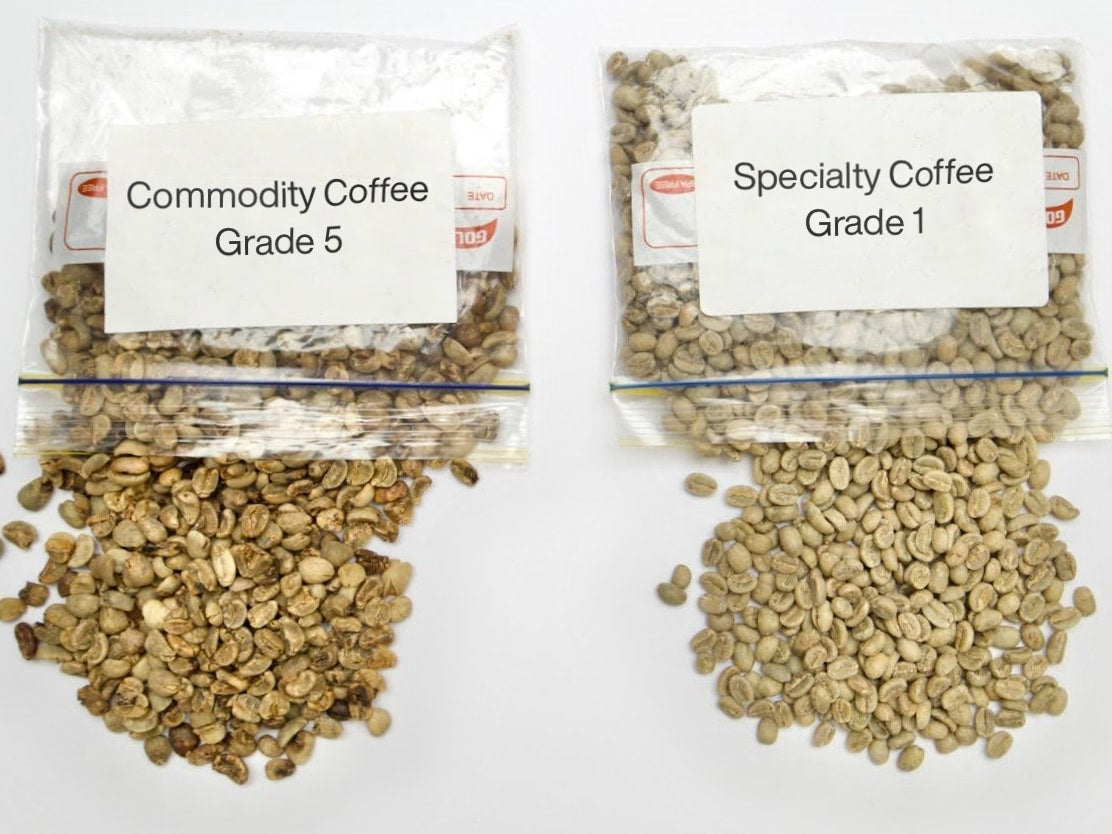
A lot of people wonder why some coffees cost more than others, or what makes “specialty” coffee different from the cheaper bags you see in supermarkets. The easiest way to understand it is to look at the coffee before it’s roasted. The photo above shows two samples of green coffee we inspect in the roastery: on the left is a low-grade, commodity coffee (Grade 5), and on the right is a high-grade specialty coffee (Grade 1). Even without tasting them, the difference is clear.
What Do Coffee Grades Mean?
Before roasting, coffee is sorted and graded based on how many defects are found in a sample. A “defect” might be an unripe bean, a broken one, a blackened bean, or even bits of husk or stick. Fewer defects = cleaner, sweeter, more consistent flavour.
The sample on the right is Grade 1 — the highest grade, with very few defects. These coffees often qualify as specialty, meaning they taste clean, sweet and interesting in the cup. The sample on the left is Grade 5 — a low grade with lots of issues. This is the type of coffee used in cheap instant blends or very dark supermarket roasts.
Grade 1 vs Grade 5: What’s the Actual Difference?
| Grade 1 Specialty Coffee | Grade 5 Commodity Coffee |
|---|---|
| Clean, even colour Uniform size and shape Very few defects Hand-picked ripe cherries Grown in ideal conditions (altitude, shade) Naturally sweet, complex flavour |
Mixed colours and broken beans Many defects, including black or sour beans Often machine-picked (mixed ripeness) Grown for volume, not flavour Harsh, bitter, inconsistent taste |
Why This Matters for Your Coffee
When you start with cleaner, higher-quality beans, you don’t need to roast dark to hide bad flavours. Specialty coffees can be roasted to bring out their natural character — fruity, chocolatey, nutty, floral — depending on where they’re grown and how they’re processed.
Low-grade coffees usually lack this sweetness and clarity, so they’re roasted very dark to mask defects. That’s why cheap coffee often tastes burnt or bitter no matter how you brew it.
Experience the difference
Curious? You can always try our single origin coffee and taste the difference for yourself at home, or (if you're local) join us for one of our free Single Origin Tasting sessions where you can see, smell, and taste everything up close.

Written by Peter Lawrence

Leave a comment
This site is protected by hCaptcha and the hCaptcha Privacy Policy and Terms of Service apply.